The 5th edition of the Egypt Mining Forum (EMF 2026) kicked off on Monday, September 28, 2026, in the New Capital under the patronage and in the presence of President Abdel Fattah El-Sisi, under the theme “Unlocking the Exploration Potential of Egypt and the Arabian-Nubian Shield.”
The event, hosted by the Ministry of Petroleum and Mineral Resources, is held on September 28–29, 2026, serving as an international platform to showcase Egypt’s abundant mineral resources.
The Forum is attended by major international mining companies, as well as ministers and officials responsible for mining from Arab and African countries.
The Opening Ceremony
September 28, 2026
H.E. President Abdel Fattah El-Sisi, President of the Arab Republic of Egypt, inaugurated the fifth edition of Egypt Mining Forum (EMF), held on September 28 and 29 in the New Capital under the theme “Unlocking Egypt and the Arabian-Nubian Shield's Exploration Potential” with broad participation from local and international mining investors, as well as ministers and mining officials from a number of mining-active countries.
Upon his arrival at the forum venue, the President was received by Prime Minister, Dr. Moustafa Madbouly, and Minister of Petroleum and Mineral Resources, Eng. Karim Badawi.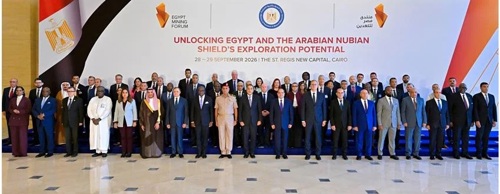
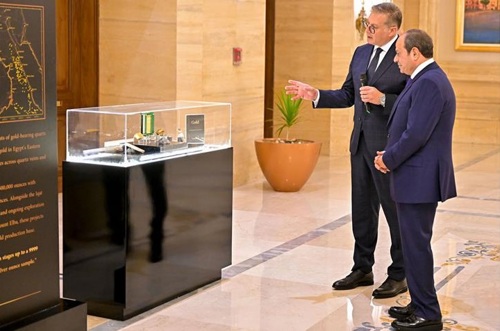
A commemorative photo was taken of the President alongside forum participants, including government representatives, heads of international organizations, and major foreign companies operating in the mining sector. President El-Sisi then inspected a selection of exhibits presented by the Geological Museum, prior to the commencement of the opening proceedings.
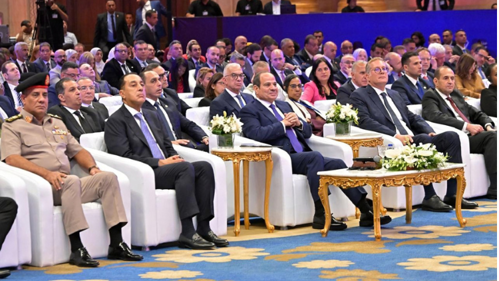
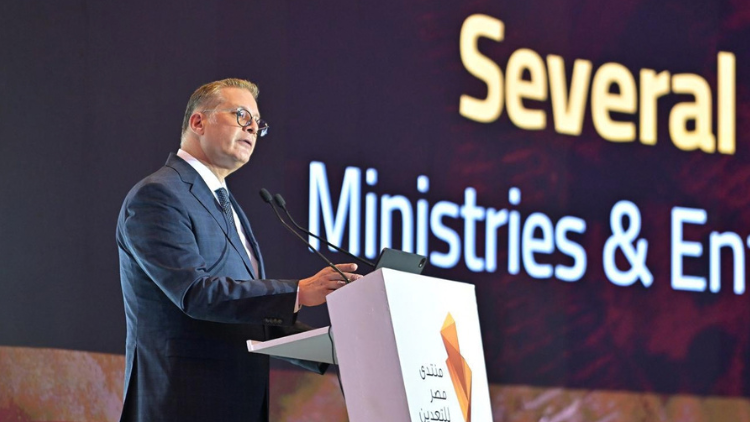
The opening program featured a documentary film titled ‘Egypt: From the Gold of the Past to the Future of Mining.’ This was followed by an address delivered by Minister of Petroleum and Mineral Resources, Eng. Karim Badawi, and subsequently a keynote speech by Chief Executive Officer of AngloGold Ashanti, Mr. Alberto Calderon.
In his opening speech, Eng. Karim Badawi, Minister of Petroleum and Mineral Resources, asserted that Egypt has the key foundations needed to build an integrated mining sector capable of maximizing its contribution to the national economy. He highlighted that Egypt is targeting an increase in the sector’s contribution to GDP to around 6% in the coming period, alongside increasing investment and the number of companies operating in the sector, expanding manufacturing projects, and maximizing value addition.
He further affirmed that the mining sector continues to receive the support of President Abdel Fattah El-Sisi, who has placed maximizing the utilization of Egypt’s natural resources and opening new avenues for investment among the Egyptian state’s top priorities. He pointed out that shifting from the extraction and export of raw materials in their primary form toward maximizing their utilization and expanding value-added activities lies at the heart of Egypt’s approach to developing the sector.
The minister announced that, during the first three months following the launch of the Open Blocks System for offering mining blocks on June 10, 2026, 119 companies submitted applications, including more than 14 foreign companies from Australia, the United Kingdom, Canada, Saudi Arabia, Türkiye, South Africa, India, and China.
He explained that the companies submitted 403 bids for 118 blocks out of a total of 335 blocks offered. The blocks cover a total area of nearly 45,000 square kilometers and include promising areas for gold, phosphate, talc, kaolin, and other mineral resources.
He noted that the new system provides greater flexibility and expedites the awarding of areas in line with internationally adopted mechanisms, reflecting the state’s shift toward a more open investment model that responds to market needs.
He added that this strong interest represents a genuine launchpad for the exploration and development of mineral resources within the Arabian-Nubian Shield.
He pointed to the Sukari Gold Mine, one of the world’s major gold mines, as an example of Egypt’s promising mineral wealth. The mine has produced approximately 6.8 million ounces of gold since production began in June 2009, demonstrating the potential for further growth in the coming period.
The minister reviewed the key advantages underpinning Egypt’s efforts to develop its mining sector, foremost among them its diverse geological wealth across extensive areas of the Eastern Desert and South Sinai, as well as its distinctive geological location within the Arabian-Nubian Shield. These factors provide opportunities for the exploration and prospecting of gold, copper, base metals, nickel, cobalt, rare earth elements, and other mineral resources.
He added that these advantages are complemented by the availability of energy sources, an advanced network of roads and ports, and developed infrastructure, as well as Egypt’s strategic geographical location connecting three continents and overlooking the Mediterranean and Red seas. This is in addition to the Suez Canal, one of the world’s most important trade arteries, providing a strong foundation for building an integrated mining sector and attracting long-term investment.
Regarding the development of the legislative and institutional framework, he pointed to the issuance of Law No. 87 of 2025 on reorganizing the Mineral Resources Authority and transforming it into the Mineral Resources and Mining Industries Authority as an economic authority. This has strengthened its ability to manage and develop mineral resources according to more efficient economic principles.
He explained that the composition of the Authority’s Board of Directors reflects the state’s approach to integration and the harmonization of the visions of relevant entities through the participation of representatives from government ministries. These include the Ministry of Environment, to ensure compliance with environmental requirements and facilitate related licensing procedures; the Ministry of Industry, to link mining with industrial development plans, maximize added value, and support the localization of industries; and the Ministry of Finance, to strengthen financial coordination and strike a balance between facilitating investment and maximizing state revenues. This enables the provision of one-stop-shop services to investors.
He noted that a new model for gold exploitation agreements has been prepared, providing greater clarity and flexibility while enhancing investment competitiveness. This has generated increased interest among major global mining companies in the new model.
The minister stressed that developing the sector requires, alongside legislative reforms, direct engagement with investors. He explained that the ministry had surveyed investors in various mining markets, from Australia to Canada, to identify their needs and the challenges they face, while also studying leading experiences and practices in advanced mining countries.
He added that, based on this dialogue, the government has begun developing and launching a package of incentives and measures in response to proposals put forward by Egyptian and foreign investors. These measures aim to provide a more attractive, flexible, and competitive environment that enables investors to direct their resources and expertise toward exploring, discovering, and developing mineral resources and maximizing their value.
He noted that important amendments had also been introduced to the executive regulations to provide greater flexibility in exploration and prospecting activities, enhance incentives for investors, and reduce the cost-related risks associated with the early stages of operations.
He stressed the importance of developing a more comprehensive and accurate geological database through targeted aerial surveys across the country. This would help investors make decisions based on better information, reduce the risks and costs associated with exploration and prospecting, and direct capital toward the most promising areas.
Regarding value addition, the minister explained that Egypt ranks third globally in phosphate rock reserves and seventh globally in phosphate production in 2025, stressing that efforts are underway to maximize the utilization of these resources.
He noted that work is underway to implement eight new industrial projects aimed at maximizing the utilization of phosphate rock, foremost among them the first phase of the Abu Tartour Phosphoric Acid Complex, with an annual production capacity of 250,000 tons and investments of up to $650 million. Production is scheduled to begin in 2028. Other projects include the production of phosphate fertilizers in cooperation with Egyptian and international investors, as well as expanding the exploitation of raw materials and minerals needed for the energy industry and future industries.
He stressed that the objective goes beyond increasing production to maximizing added value, creating new job opportunities, increasing exports, and attracting high-quality investments based on technology, expertise, and knowledge. He explained that achieving these objectives requires a genuine partnership between the state and investors, a stable investment environment, streamlined procedures, the availability of information, and the transformation of geological opportunities into viable economic projects.
Regarding human resources development, he stressed that investment in mining encompasses knowledge, geology, technology, infrastructure, and human resources. He noted the state’s focus on preparing engineers, geologists, technicians, and specialized professionals capable of working with the latest exploration and extraction technologies.
He explained that training programs have been launched at Australia’s Murdoch University, while work is underway to establish a school of applied technology specializing in mining and phosphate in New Valley Governorate to prepare qualified technical personnel capable of meeting the sector’s needs. He stressed that true wealth also includes professionals capable of discovering resources and transforming them into economic value.
He said that Egypt draws on a long history in mining, promising geological wealth, advanced infrastructure, and human resources, in addition to a legislative framework undergoing continuous development. These factors position the sector to enter a new phase characterized by expanded exploration, increased production, more diversified investment, greater value addition, and deeper partnerships with investors.
At the conclusion of his speech, the minister delivered three key messages. In his first message to investors, he affirmed that Egypt is opening its doors to serious mining investments and welcomes partnerships based on long-term investment, knowledge and technology transfer, and maximizing value addition. He also reaffirmed the government’s commitment to developing the investment environment, listening to investors, and addressing challenges facing exploration and production activities.
In his second message to the people and youth of Egypt, he stressed that mining represents one of the most important avenues for the future of younger generations.
He said the objective is to empower Egyptian professionals with the knowledge, skills, and expertise needed to participate effectively in and lead the development of the sector, emphasizing that underground wealth can only reach its full value through Egyptian minds capable of maximizing its utilization.
His third message was addressed to attendees and the mining community. He stressed that the forum marks the beginning of a new phase in the development of the sector and in transforming underground resources into tangible value for the Egyptian economy.
He expressed his hope that the forum’s proceedings would result in new partnerships and investments in Egypt and the region.
The minister reiterated his thanks and appreciation to President Abdel Fattah El-Sisi for his continued support for the development of the mining sector and the maximization of Egypt’s mineral wealth.
He also thanked the Prime Minister, ministers, state institutions, workers in the mineral resources sector, and Egyptian and international investment partners.
The program also included a documentary on the Sukari Gold Mine, as well as remarks by Chief Executive Officer of the Australia-Africa Minerals and Energy Group (AAMEG), Mr. Doug Horak, and President and Chief Executive Officer of the International Council on Mining and Metals (ICMM), Mr. Rohitesh Dhawan. These were followed by a presentation titled ‘Open Blocks’ and an address by Global Director of Mining and Metals at the World Bank Group, Ms. Namrata Thapar, followed by a live broadcast from various mining sites across the Arab Republic of Egypt.
During his intervention at the opening of the Egypt Mining Forum, President El-Sisi welcomed the attendees to the fifth edition of the event and reaffirmed the Egyptian State’s commitment to ensuring the success of investments by companies and business leaders, whether in mining or any other sector.
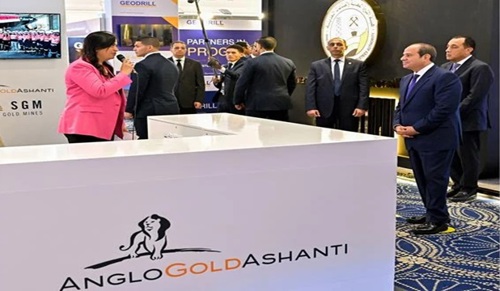
Later, the President toured the Egypt Mining Exhibition. His Excellency commenced the inauguration proceedings with the ceremonial cutting of the ribbon to mark its official opening.
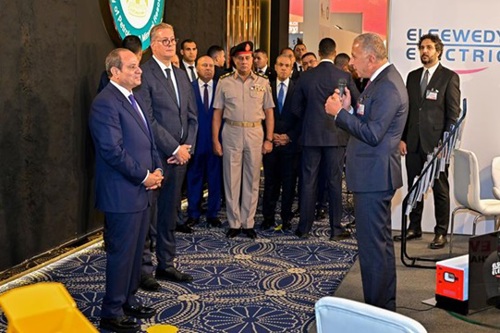
President El-Sisi then inspected the pavilions of the Ministry of Petroleum and Mineral Resources, as well as those of Capital Drilling, Elsewedy Electric, and AngloGold Ashanti.
President El-Sisi Reviews Live Footage from Mining Sites Across Egypt
President Abdel Fattah El-Sisi reviewed live footage via videoconference from mining sites across Egypt on the sidelines of the opening of the Egypt Mining Forum.
The footage showcased ongoing operations and activities at several sites, highlighting the efforts of Egyptian personnel and workers.
Eng. Haitham Okasha, Director of Development and Strategic Planning at the Sukari Mine in Marsa Alam, said operations at the mine continue around the clock, with approximately 300,000 tons of rock excavated and transported daily to supply the gold processing plant. He noted that extensive exploration programs are also underway to further enhance the Sukari Mine’s performance.
For his part, Eng. Mohamed Rashad Melha, Deputy Director of the Gold Processing Plant at Sukari Company in Marsa Alam, explained that the plant processes extracted ore into high-purity gold bars, with an annual production capacity of up to 500,000 ounces of gold.
He affirmed the company’s commitment to the highest standards of safety, efficiency and sustainability to maximize the utilization of mineral resources.
Meanwhile, Eng. Ahmed Badawi El-Mahdy, General Manager of Projects at the Abu Tartour Phosphoric Acid Company in the New Valley, said the first phase of the project aims to produce 480,000 tons of commercial-grade phosphoric acid annually. He noted that efforts are being intensified to commence commercial operations during the fourth quarter of 2028.
Chemist Samir Abdel Nabi, CEO of Abu Zaabal Fertilizers Company in Qalyubia, said the company relies on Egyptian phosphate rock to produce high-quality phosphate fertilizers, with the aim of meeting domestic market needs and exporting the surplus to around 50 countries worldwide.
He affirmed that the company’s strategy is based on continuous development to enhance sustainability and competitiveness.
In turn, Eng. Ragab Afifi, Site 4 Manager in the Al-Sibaiya East area at WadiCo in Aswan, explained that the site has an annual production capacity of approximately 2 million tons of phosphate. He noted that a green mining model is being implemented through the use of electric equipment.
He added that a solar power plant is currently under construction, with the aim of saving approximately 2.6 million liters of diesel fuel annually. The site is also implementing an integrated digital system and adhering to the highest safety standards.
Day 2
September 29, 2026
Prime Minister Holds Roundtable on Building Investor Confidence across Egypt’s Mining Value Chain
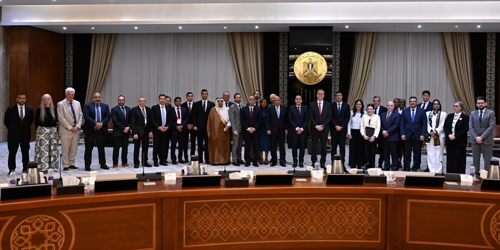
Prime Minister Dr. Mostafa Madbouly on September 29, 2026, convened a roundtable at the Cabinet headquarters in the New Administrative Capital entitled “From Discovery to Industrial Development: Building Investor Confidence across the Mining Value Chain in Egypt,” as part of the fifth edition of the Egypt Mining Forum 2026, which opened on September 28, 2026, under the patronage and in the presence of President Abdel Fattah El-Sisi under the theme “Unleashing Egypt’s Exploratory Potential and the Nubian Shield.”
The roundtable was attended by Minister of Petroleum and Mineral Resources Karim Badawi; Minister of Electricity and Renewable Energy Mahmoud Esmat; Minister of Industry and Transport Lieutenant General Engineer Kamel El-Wazir; Minister of Investment and Foreign Trade Hassan El-Khatib; Minister of Labour Mohamed Gebran; Minister of Local Development and Environment Manal Awad; Minister of Finance Ahmed Kouchouk; Minister of Housing, Utilities and Urban Communities Sherif El-Sherbiny; Minister of Planning, Economic Development and International Cooperation Rania Al-Mashat; Minister of Supply and Internal Trade Sherif Farouk; Minister of Tourism and Antiquities Sherif Fathy; Minister of Parliamentary Affairs, Legal Affairs and Political Communication Mahmoud Fawzy; Minister of Agriculture and Land Reclamation Alaa Farouk; and Minister of International Cooperation Badr Abdelatty.
The meeting was also attended by a number of senior officials, representatives of major mining companies, investors, experts and industry stakeholders.
At the outset of his remarks, Prime Minister Madbouly emphasized the government’s keenness to translate the outcomes of the Egypt Mining Forum into tangible, on-the-ground projects, in line with the President’s directives to maximize the use of Egypt’s natural resources and strengthen the mining sector’s contribution to the national economy.
He noted that the government is working to provide the necessary incentives and facilitate procedures for investors, while also exploring new forms of partnership with the private sector to accelerate the development of mining projects.
Madbouly highlighted Egypt’s significant geological potential, stressing the importance of transforming mineral resources into added value by linking exploration and extraction activities with processing, manufacturing and downstream industries.
He pointed to the need to develop an integrated mining ecosystem encompassing infrastructure, energy, transportation, logistics and industrial facilities, which would enable Egypt to strengthen its position as a regional center for mining and mineral industries.
Minister of Petroleum and Mineral Resources Karim Badawi reviewed the ministry’s efforts to develop the mining sector and maximize value addition, emphasizing the importance of expanding processing capabilities and increasing the contribution of mineral resources to industrial development.
He noted that the government is working to create a more attractive investment environment and enhance cooperation with international companies in exploration, production and processing.
The participating investors and representatives of international mining companies highlighted Egypt’s geological potential and discussed a number of issues related to infrastructure, energy availability, regulatory frameworks, licensing procedures and the sustainability of investment policies.
Minister of Electricity and Renewable Energy Mahmoud Esmat reviewed efforts to secure the electricity requirements of mining and industrial projects, including through expanding the use of renewable energy and energy-storage technologies.
Minister of Industry and Transport Kamel El-Wazir stressed the importance of strengthening integration between the mining and industrial sectors by linking mineral feedstocks with manufacturing activities and developing value chains that increase the added value of Egypt’s natural resources.
Other participants addressed issues related to workforce development, local employment and the participation of women in the mining sector.
The meeting concluded with Prime Minister Madbouly reaffirming the government’s commitment to maintaining open channels of communication with investors and working to address challenges facing mining projects, with a view to accelerating implementation and maximizing the sector’s contribution to Egypt’s economic and industrial development.
International Mining Leaders' Remarks at Egypt Mining Forum 2026
AngloGold Ashanti CEO Praises Egypt’s Mining Potential
AngloGold Ashanti CEO and Executive Director Alberto Calderon on Monday praised President Abdel Fattah El-Sisi’s efforts to develop Egypt’s economy and strengthen the mining sector as a driver of industrial development.
Speaking at the opening of the fifth edition of the Egypt Mining Forum 2026, in the presence of President El-Sisi, Calderon said the forum highlights Egypt’s significant potential in the mining sector.
He added that gold assets support broader economic activity and contribute to job creation.
Calderon said that when AngloGold Ashanti began operating in Egypt in November 2024, the company sought to develop the existing reserves at the Sukari Mine while also tapping its significant potential for further exploration.
The company operates gold mines in Australia, Canada and West Africa, Calderon noted, adding that Sukari remains a clear example of Egypt’s natural wealth, particularly in the Eastern Desert, which he said remains largely unexplored.
AAMEG CEO Praises Egypt’s Mining Vision
Doug Horak, CEO of the Australia-Africa Minerals and Energy Group (AAMEG), on Monday praised President Abdel Fattah El-Sisi’s vision for Egypt’s mining sector and the goals set under Egypt’s Vision 2030 and beyond.
Speaking at the opening of the Egypt Mining Forum in the New Capital, in the presence of President El-Sisi, Horak said he was pleased to participate in the first day of the forum, noting that AAMEG supports Australian companies seeking to operate in Africa.
He also highlighted the group’s cooperation with Egypt’s Ministry of Petroleum and Mineral Resources over the past year, describing the progress achieved in terms of participation, preparedness and cooperation as unprecedented.
Horak said the timing of efforts to develop the mining sector was particularly favorable, pointing to renewed investment across the African continent, as well as increased exploration for strategic minerals.
He expressed hope that these efforts would help meet the needs of the global energy transition and support activities and objectives that would strengthen the sector and improve mineral prices, making mining more profitable for host countries such as Egypt.
Horak also pointed to increased investment in Europe, the United Kingdom, the Middle East and the United States, alongside longstanding investments in China and Türkiye. He noted the growing shift of manufacturing and investment toward India and Africa, which he said would shape the future of economies in these regions and the global economy.
The AAMEG CEO also expressed his desire to see the appointment of an honorary Egyptian consul in Western Australia, as well as the establishment of a representative office for the ministry there, with the aim of further developing the bilateral relationship, which began a year ago and has already achieved a number of successes.
ICMM Chief Hails Egypt’s Mining Reforms
Rohitesh Dhawan, President and CEO of the International Council on Mining and Metals (ICMM), praised the reforms introduced by the Egyptian state to develop the mining sector, stressing that Egypt has significant mining potential.
Speaking at the opening of the fifth edition of the Egypt Mining Forum in the presence of President Abdel Fattah El-Sisi on Monday, Dhawan said he was honored to represent the world’s leading mining companies at the forum, adding that Egypt had become an attractive destination for mineral investment.
He expressed his aspiration for further cooperation with Egypt in the mining sector, noting that the country has significant potential to attract mining investment, supported by its strategic geographical location.
For her part, Namrata Thapar, Global Director, Metals and Minerals at the World Bank Group, expressed her eagerness to work with the Egyptian government and the European Bank for Reconstruction and Development (EBRD), welcoming all partners to work together to translate Egypt’s vision into tangible opportunities for the Egyptian people.
Thapar said Egypt’s partnership with the World Bank Group, under the leadership of the Minister of Petroleum and Mineral Resources, as well as the World Bank Group’s strategy on minerals, is of great importance, particularly given Egypt’s strategic location in a region experiencing ongoing tensions.
She added that the World Bank Group has established partnerships with Egypt in the mining sector, noting that the country has many of the basic requirements needed to transform its mineral wealth into economic growth and create jobs, supported by its diverse mineral resources and strategic location.
She noted that, alongside government reforms, these advantages provide a pathway for exploration, production, mineral processing and exports, as well as job creation, with the World Bank Group supporting these efforts.
Thapar said the mining sector is one of the engines of economic growth, adding that Egypt’s Vision 2030 reflects the country’s ambitions to become a hub for mining investment.
“Minerals in Egypt support these ambitions, and there is joint work between the Egyptian government and the World Bank Group to strengthen this path,” she said, pointing to partnerships through which the World Bank Group can support Egypt’s economic development.
Thapar expressed hope that the measures to be adopted would help create thousands of direct and indirect jobs by 2040, supporting various industries, providing employment opportunities for young people and attracting billions of dollars in foreign direct investment.
Petroleum Minister's Meeting on the Sidlines
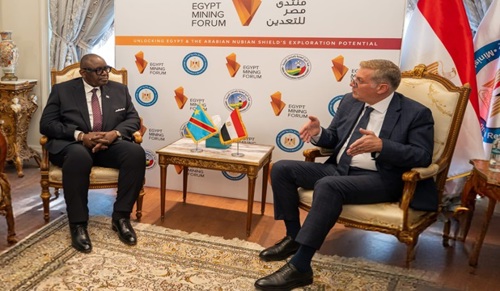
Minister of Petroleum and Mineral Resources Karim Badawi met with DRC Minister of Mines Louis Watum, on the sidelines of Egypt Mining Forum, to discuss ways to strengthen bilateral cooperation in the mining sector and explore new areas of partnership between the two countries.
Badawi said developing the mining sector goes beyond exploration and extraction activities to encompass an integrated system involving infrastructure, energy, construction, engineering services and manufacturing, creating broad opportunities for cooperation between Egypt and the Democratic Republic of the Congo (DRC).
Badawi highlighted that maximizing the added value of mineral resources is a key driver of higher economic returns through expanding partnerships and projects aimed at processing raw materials and integrating them into value chains.
He stressed that achieving this requires coordinated efforts among governments, the private sector, financial institutions and companies operating in the sector.
He explained that governments play an important role in creating a favorable investment environment by developing infrastructure and providing the necessary energy and services, helping reduce project costs and enhance competitiveness, thereby attracting further investment in mining activities and related industries.
The meeting also discussed opportunities to link Egyptian and Congolese companies and capitalize on the complementary expertise and capabilities of both sides in mining, infrastructure, energy and engineering services.
This would support joint projects and contribute to building more integrated mining value chains.
For his part, the DRC Minister of Mines expressed his interest in strengthening cooperation with Egypt and benefiting from the expertise and capabilities of Egyptian companies in mining-related fields to maximize the utilization of his country’s mineral resources.
The two sides agreed to continue coordination in the coming period, identify priority areas of cooperation, and work to connect companies and institutions in both countries and translate cooperation opportunities into practical partnerships and projects that serve their mutual interests.
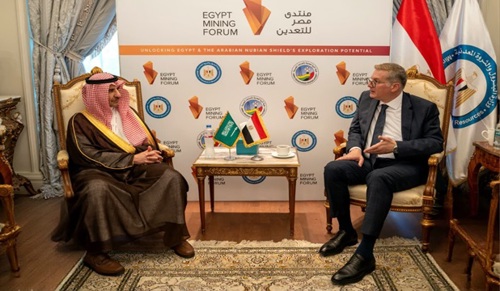
Minister of Petroleum and Mineral Resources Karim Badawi held talks with Saudi Deputy Minister of Industry and Mineral Resources for Mining Affairs Khalid bin Saleh Al-Mudaifer on ways to enhance cooperation in training and the exchange of mining expertise. This came on the sidelines of the Egypt Mining Forum 2026, held in the New Capital.
Badawi said the Egyptian-Saudi relations represent a well-established model of partnership and long-standing cooperation across various fields, stressing the importance of strengthening cooperation between the two countries in mining, given their shared geological characteristics within the Arabian-Nubian Shield and the promising opportunities this offers for exchanging expertise, boosting investment and developing mineral resources.
He highlighted Saudi Arabia’s advanced experience in developing its mining sector, stressing the importance of mutually benefiting from the successful expertise and experiences of both countries in support of efforts to develop the sector and enhance the capabilities of its workforce.
For his part, Al-Mudaifer commended the steps taken by the Ministry of Petroleum and Mineral Resources to develop Egypt’s mining sector over the past two years.
He highlighted efforts to develop the sector’s institutional framework and transform the Egyptian Mineral Resources Authority into an economic authority, enhancing its ability to manage and exploit mineral resources and maximize their returns, alongside efforts to expand mining industries and maximize the added value of mineral resources and ores.
Al-Mudaifer also praised Egypt’s move toward conducting airborne mineral surveys, describing them as an important tool for providing more accurate and comprehensive data on geological and mining potential, supporting exploration activities and enhancing the sector’s attractiveness to mining investment.
He said the current edition of the Egypt Mining Forum had witnessed growing participation and interest from international companies, alongside an increasing presence of Saudi companies, which have shown growing interest in investment and cooperation opportunities in Egypt’s mining sector in light of the developments taking place in the sector and efforts to create a more attractive investment environment.
On human capacity development, Al-Mudaifer affirmed the Saudi mining sector’s openness to strengthening cooperation with Egypt’s Ministry of Petroleum and Mineral Resources in training, expertise exchange and capacity building, as well as benefiting from the two sides’ accumulated experience in developing national skills and enhancing their readiness to meet the requirements of the modern mining sector.
In this regard, he commended a training program for a number of officials from the Egyptian Mineral Resources Authority at Australia’s Murdoch University, stressing the importance of such training programs in providing exposure to the latest international practices and expertise and transferring knowledge to national cadres in support of efforts to develop the mining sector.
The two sides also agreed to expand areas of cooperation in human capacity development by organizing joint meetings and training programs, exchanging expertise and benefiting from advanced experiences and practices in the mining sector, thereby enhancing the capabilities of national cadres and supporting the development of the sector in both countries.
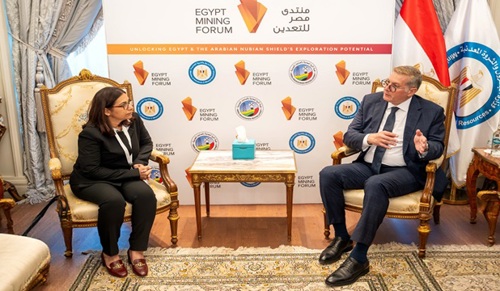
Minister of Petroleum and Mineral Resources Karim Badawi held talks with Namrata Thapar, Global Director for the Minerals and Mining Sector at the World Bank Group, on ways to enhance cooperation in developing Egypt’s mining sector, providing financing mechanisms and building capacities. This came on the sidelines of the Egypt Mining Forum 2026, held in the New Capital.
During the meeting, Badawi said the state is seeking to bring about a genuine qualitative transformation in the mining sector and raise its contribution to GDP to around 6 percent, compared with less than 1 percent currently, by creating an attractive investment environment and strengthening partnerships with the private sector and international institutions.
Badawi stressed the importance of translating cooperation with the World Bank Group into practical steps and implementable projects, noting that the targeted support would cover human capacity building, technical expertise transfer, partnerships, and contributing to addressing infrastructure challenges that could affect project implementation.
The minister outlined three main areas of cooperation: building capacities and developing human resources; supporting value-added projects, particularly in phosphate, fertilizers and related industries; and supporting emerging mining companies during the exploration phase and connecting them with financing sources and partners capable of supporting their growth.
He also stressed the importance of enhancing coordination among various government entities to address challenges facing investments, noting that the ministry is ready to work with investors and international institutions as one team to expedite procedures and turn mining opportunities into productive projects with added value.
For her part, Thapar, who is participating as one of the forum’s keynote speakers, affirmed the World Bank Group’s interest in providing initial financing to support Egypt’s mining sector.
She said capacity building represents a practical starting point for enhancing cooperation, while expressing the group’s interest in supporting private-sector projects and connecting emerging mining companies with investors to expand their growth opportunities.
Thapar also pointed to cooperation with the Egyptian side in preparing a minerals roadmap that includes assessing geological potential and identifying the requirements needed to develop and exploit mineral resources, supporting Egypt’s efforts to maximize the economic benefits of its resources and enhance its integration into global value chains.
The two sides agreed on the importance of treating mining as an integrated value chain, beginning with exploration and extending through processing, manufacturing and exports, in a way that maximizes the added value of mineral resources rather than limiting activities to the production and export of raw materials.
The two sides also agreed to continue coordination on identifying priorities for utilizing initial financing, preparing lists of targeted projects and companies, supporting emerging companies, and continuing work on the minerals roadmap to attract more investment to the sector.
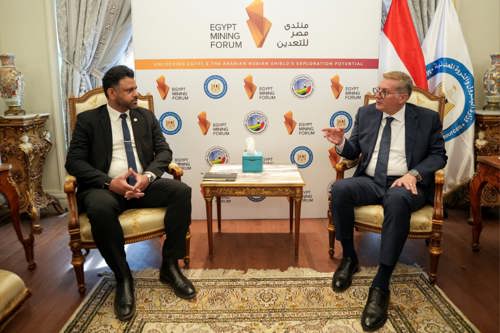
Minister of Petroleum and Mineral Resources Karim Badawi met with Vice President of international company Worley Vivek Natarajan, on the sidelines of the Egypt Mining Forum 2026 to discuss ways to leverage the company’s global expertise and capabilities to support mining projects in Egypt.
The meeting focused on utilizing specialized international expertise to develop mining projects and enhance implementation efficiency, in line with the state’s efforts to maximize the added value of mineral resources and attract further investment to the sector.
Badawi stressed the importance of cooperation with international companies with expertise across the various stages of mining projects.
The two sides also discussed training and human capital development through practical training and technical qualification programs aimed at enhancing the capabilities of Egyptian workers and enabling them to benefit from global technologies and practices.
Natarajan expressed his appreciation for the warm reception and welcomed the opportunity to participate in the Egypt Mining Forum 2026. He said Worley was keen to deepen cooperation with the ministry and companies operating in Egypt’s mining sector.
The two sides agreed to strengthen links between Worley and Egyptian mining companies to better understand their needs, projects, and development stages, opening up opportunities for cooperation in infrastructure, processing facilities, and other components of mining projects.
They also agreed to maintain coordination on existing and new projects and explore ways to apply Worley’s expertise to integrated solutions supporting the growth of Egypt’s mining sector and the development of its workforce.
Agreement and MoUs
The Egyptian-Finnish Memorandum of Understanding with Metso
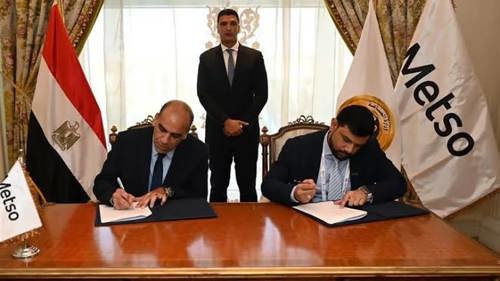
Minister of Industry Khaled Hashem witnessed the signing of a memorandum of understanding (MoU) between the ministry and Finnish mining company Metso to provide technical and operational support for mineral processing and extraction projects in Egypt, particularly those involving iron ore and phosphate, on the sidelines of the Ministry of Industry’s participation in the fifth edition of the Egypt Mining Forum.
Hashem said the MoU aims to provide technical and advisory support for mineral processing and extraction projects, contributing to the optimal utilization of Egypt’s mineral resources and maximizing their added value.
He said the signing of the MoU is part of the ministry’s efforts to strengthen industrial integration and optimize the use of Egypt’s mineral resources.
He noted that the agreement supports the mining industries sector, which the ministry considers a promising area and a priority given its significant potential to attract new investment, create added value, deepen local manufacturing, bridge import gaps, and boost exports.
The MoU covers several areas of cooperation, including research support and laboratory analyses by Metso; feasibility studies and advanced technical assessments aimed at improving the utilization of mineral resources; and engineering consultancy and the provision of field experts to support local teams and companies. These efforts will enhance operational efficiency and facilitate the transfer of technical expertise and knowledge.
The MoU is expected to pave the way for subsequent detailed and implementation agreements defining the technical and commercial scope of each project separately. This is in line with the Ministry of Industry’s vision of supporting comprehensive economic development plans, maximizing the utilization of national mineral resources, and increasing the added value of mineral products.
On the sidelines of the signing ceremony, Hashem met with Raghneesh Mishra, Metso’s Vice President for the Middle East, to discuss ways to strengthen cooperation between the two sides during the next phase, follow up on the implementation of the MoU, and accelerate the procedures needed to move toward projects that would contribute to the optimal utilization of Egyptian mineral resources.
For his part, Mishra affirmed Metso’s keenness to strengthen cooperation with Egypt and expand the scope of its operations in the Egyptian market.
He also invited the minister to visit Metso’s headquarters in Finland to tour its laboratories and learn about the technologies and techniques it uses in mineral processing.
Source: State Information Service



